How to Stop Watching Porn and Break the Habit
Trying to stop watching porn can feel harder than it seems like it should be. That’s because repeated behaviors — especially ones tied to comfort, stress relief, or boredom — become linked to specific situations, emotions, routines, or digital environments over time. The more a behavior is repeated in similar circumstances, the more automatic it becomes.
This doesn’t mean the process comes down to willpower alone. In reality, understanding why the habit happens, and when it tends to happen, makes it far more manageable to change. This article walks through practical, educational steps for recognizing the habit, managing urges as they arise, adjusting the environments that reinforce it, and building healthier long-term routines.
Why Is It Hard to Stop Watching Porn?
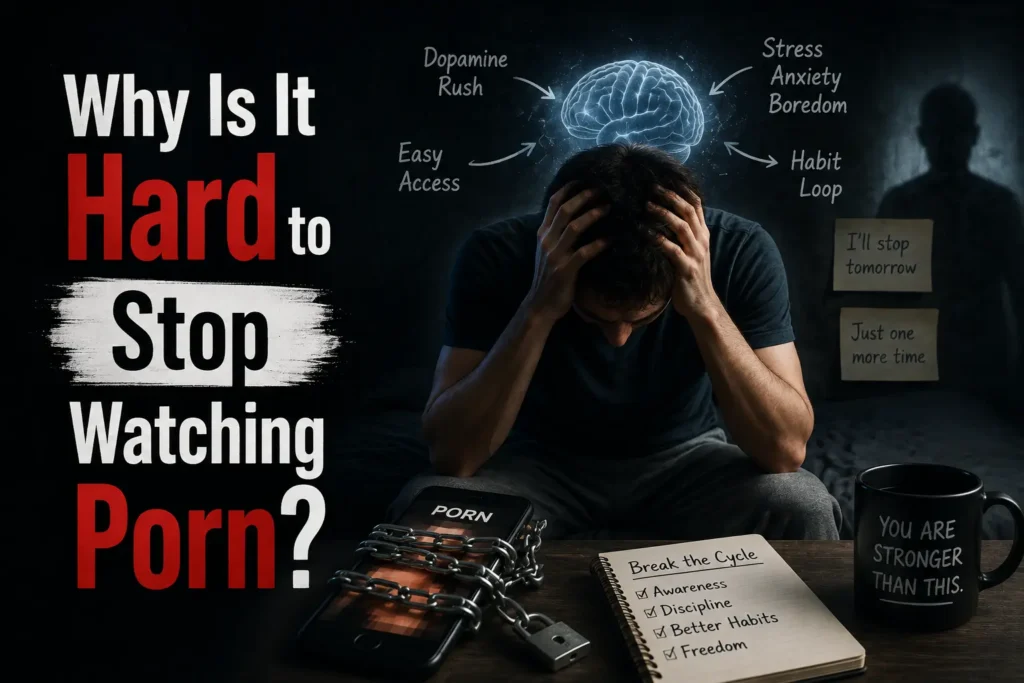
Habits form through repetition and association. When a behavior is repeated often enough in a particular context, the brain begins to link that context with the behavior itself — so the situation alone can eventually trigger the urge, even before a conscious decision is made.
Porn use frequently becomes associated with common, everyday situations: boredom, stress after a long day, loneliness, difficult or uncomfortable emotions, or simply being alone with a phone or laptop with unstructured time. Over time, these moments can start to feel like natural cues for the behavior.
A helpful way to understand this is the basic trigger → urge → behavior → short-term reward cycle. A trigger (like stress or boredom) leads to an urge, the urge leads to the behavior, and the behavior provides a quick, short-term sense of relief or distraction — which reinforces the cycle and makes it more likely to repeat.
Recognizing this pattern is often the first real step toward interrupting it, because it shifts the focus from “I have no willpower” to “I can identify where this cycle starts and make a change there.”
Identify the Triggers Behind Your Porn Habit
Before changing a habit, it helps to understand what consistently precedes it. Triggers generally fall into a few categories:
- Emotional triggers — stress, anxiety, loneliness, sadness, or even excitement
- Environmental triggers — being alone in a bedroom, a quiet house, or a specific time of day (often late at night)
- Digital triggers — certain apps, social media feeds, or browsing habits that lead to sexualized content
- Routine-based triggers — habits like scrolling on a phone before falling asleep or using screen time as a default way to unwind
A simple, practical way to identify personal triggers is to pay attention — without judgment — to when, where, and why the urge tends to show up. This isn’t about diagnosing anything; it’s about building basic self-awareness. Some people find it useful to jot down a quick note each time the urge occurs, including the time of day and what they were feeling beforehand. Patterns tend to emerge fairly quickly.
Change the Environment That Encourages the Habit
Once triggers are easier to recognize, the next step is making the behavior itself less accessible. Reducing the opportunities for an automatic response can meaningfully lower how often the urge turns into action.
Some practical environmental changes include:
- Reducing private, late-night screen time, especially alone in the bedroom
- Keeping phones or laptops outside the bedroom overnight
- Unfollowing or muting accounts that frequently surface sexualized content
- Using website or app content restrictions as an added layer of friction
These changes won’t eliminate the habit on their own — they’re not a complete solution — but they reduce the number of moments where the old pattern can play out unchecked, which gives new habits more room to take hold.
Learn How to Manage Porn Urges
An important mindset shift is understanding that experiencing an urge doesn’t mean it has to be acted on. Urges are temporary — they build, peak, and pass, usually within a matter of minutes, even when they feel intense in the moment.
One effective approach is simply delaying the response. Instead of acting immediately, try waiting it out for even five or ten minutes. During that time, changing location, going for a short walk, doing a quick physical activity, stepping away from the device, or shifting focus to something unrelated can help the moment pass.
Because urges naturally fluctuate in intensity, learning to sit with them — rather than immediately responding — gradually weakens the automatic pull of the habit. Each time the cycle is interrupted successfully, it becomes a little easier the next time.
Replace the Habit With Healthier Activities
Simply removing a repeated behavior often leaves a noticeable gap in a person’s routine — especially if it was previously used to fill idle time or manage difficult emotions. Without something to fill that space, it’s easy to slide back into old patterns.
Replacing that time with constructive activities tends to work better than trying to eliminate the habit through restriction alone. This could include exercise, a hobby, reading, learning a new skill, spending time with friends or family, spending time outdoors, or any other activity that feels genuinely engaging. The goal isn’t a complete lifestyle overhaul overnight — small, sustainable changes tend to stick far better than dramatic ones.
Deal With Stress, Boredom, and Other Emotional Triggers
For many people, porn use isn’t just about the behavior itself — it’s a way of responding to uncomfortable emotions like stress, boredom, loneliness, or frustration. Recognizing this connection is a key part of long-term change.
Building healthier responses to these emotions — such as physical activity, talking to someone, journaling, or simply having a planned alternative activity ready — can reduce reliance on the habit as an emotional coping tool. That said, if stress, anxiety, or other emotional difficulties feel persistent or hard to manage, that’s a sign that additional support, beyond self-help strategies, may be genuinely helpful.
What If You Watch Porn Again?
It’s common to return to the behavior at some point after deciding to cut back or stop, especially early on. This doesn’t mean the effort has failed — it means the habit is still being unlearned, which is a normal part of the process.
Rather than framing a setback as a reason to give up, it’s more useful to look at what happened right before it: what was the trigger, what emotion was present, and what could be done differently next time. Each setback, looked at this way, becomes useful information rather than a reason for shame.
When Should You Consider Professional Support?
For some people, self-directed strategies are enough. For others, porn use may feel genuinely difficult to control, or it may be interfering with daily responsibilities, relationships, sleep, work, education, or overall emotional wellbeing. In these cases, speaking with a qualified mental-health professional can be a helpful next step.
A professional can help identify underlying patterns, offer more individualized strategies, and provide support that goes beyond general self-help information. Seeking that kind of support isn’t a sign of failure — it’s simply another tool in the process.
Conclusion
Stopping porn use is often easier when it’s approached as a habit to understand, rather than a battle to win through willpower alone. The general process comes down to a few key steps: recognize your triggers, change the environment that supports the habit, learn to manage urges as they arise, replace the behavior with healthier alternatives, learn from setbacks instead of feeling discouraged by them, and reach out for professional support when it’s needed.
Meaningful behavioral change takes time, and progress rarely happens in a straight line. What matters most is consistent, honest effort — not perfection.